

Essentials at Liger
Essentials learning at Liger is the development of foundational knowledge and understanding in numeracy, literacy, and the humanities that gives students the academic base they need for future learning opportunities at Liger and beyond. Essentials are one hour per day, four days a week, for all five years of our program. Our Essential courses might sometimes resemble a traditional classroom, with some key distinctions. For example, our student/facilitator ratio allows for an extremely personalised approach for each learner.
Maths at Liger
Maths in Year 9-11
Year 9:
- Numbers – Whole; fractions, decimals, percentages
- Statistics – Data analysis, averages, spreads, basic statistical graphs
- Algebraic Expressions – Simplifying terms, expanding, factorising
- Measurement – Conversions, perimeter, area, volume
- Geometry – Pythagoras, angles, polygon rules, congruent shapes, scale, rotation
Year 10:
- Numbers – Standard form
- Statistics – Graphs, dot plots, bivariate, time series, box plots, limitations, and conclusions
- Algebraic Expressions – Quadratic and algebraic fractions
- Measurement – 2D and 3D shapes, modelling, probability
- Geometry – Angles and location, intro to trigonometry
- Algebraic Equations – Linear graphs and patterns, quadratics, inequalities
Year 11:
- Numbers – Solving real world problems
- Statistics – Comparative investigations, probability
- Algebraic Expressions – Simplification, rationalising, solving linear and quadratic problems
- Geometry – Trigonometry
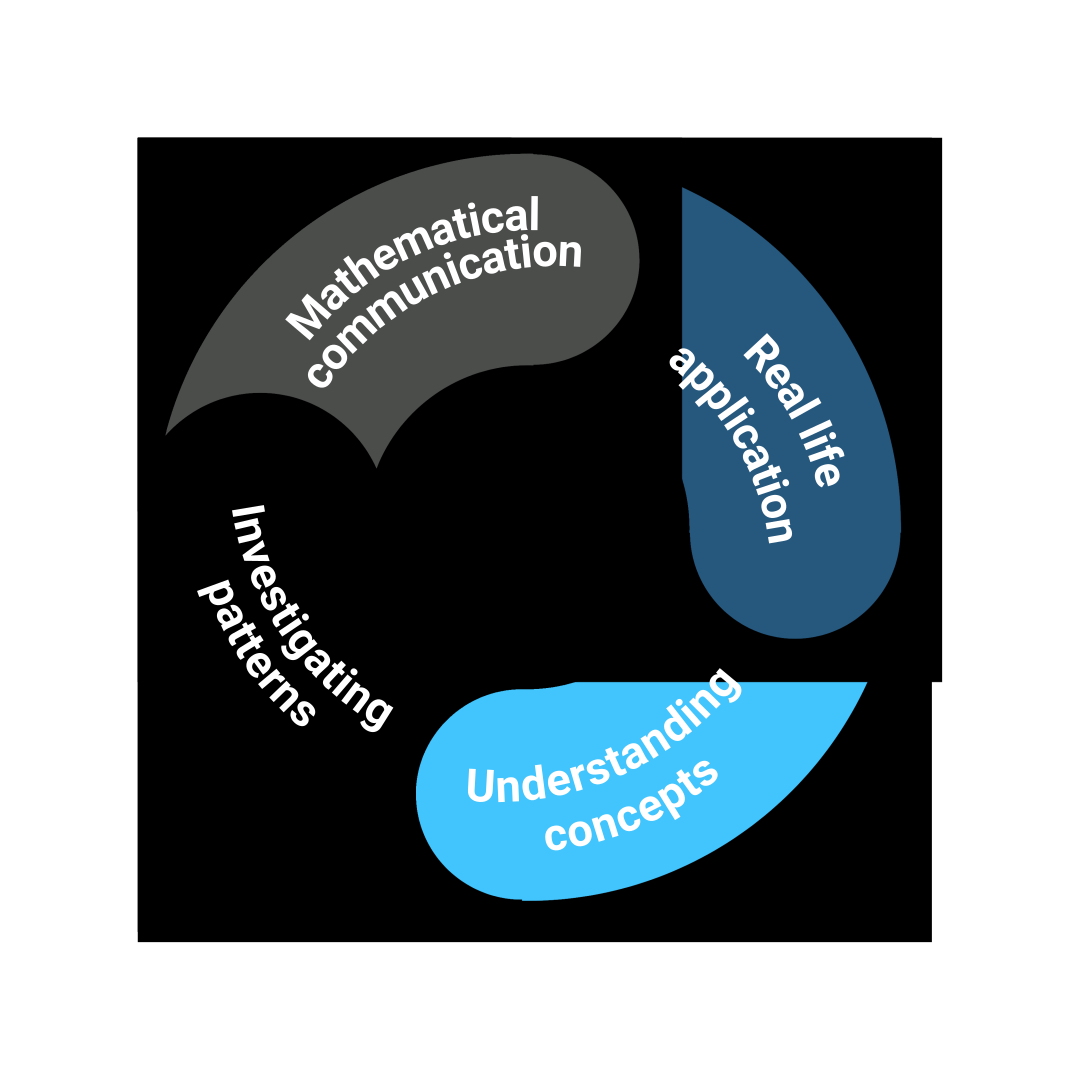
Maths Learning Objectives
Maths in Year 12-13
Beginning in Year 12, students can opt to take specialised courses which align with NCEA standards. Examples include:
Calculus
This course builds on foundational algebra, geometry, and trigonometry to introduce calculus concepts. Students will learn differentiation, integration, and their applications in real-world problems.
Statistics
This course focuses on data analysis and interpretation. Students will learn to design experiments, collect and analyse data, and make informed conclusions. They will also explore probability theory and its applications.
Communications at Liger
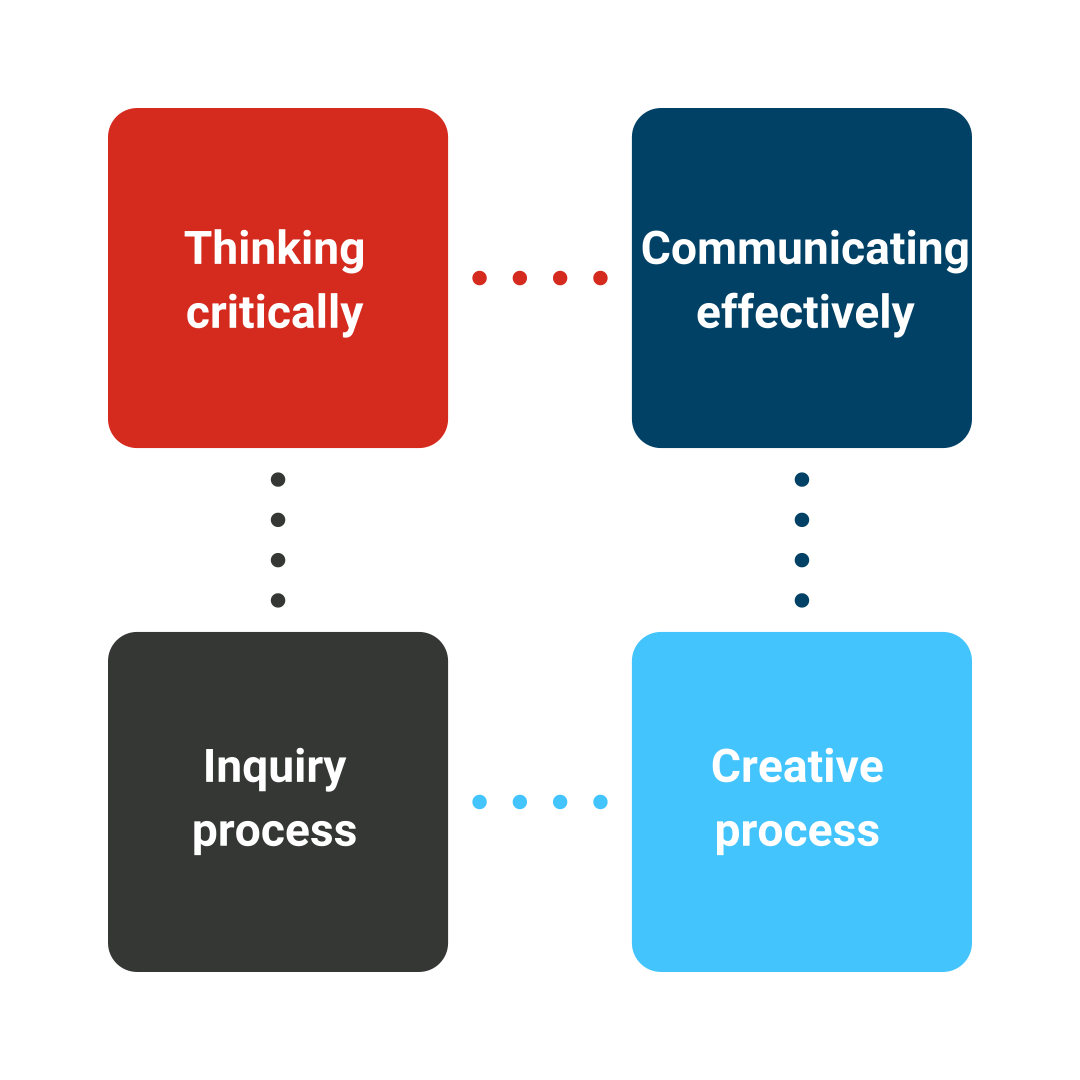
Communications Learning Objectives
Communications in Year 9-11
Year 9:
- Geography – map skills, migration patterns, displacement, and disaster management.
- Persuasive Communication – advertisements, debating, and media studies.
- Fiction – Reading and creative writing
- Non-Fiction – Viewing and creating non-fiction texts
Year 10:
- History – World conflicts, historical inquiry
- Social Studies – Civics/Citizenship, case studies
- Physical Geography Risk management (Earthquakes, avalanches, other natural disasters)
- Poetry and Song – Poetic devices and figurative language
Year 11:
- Psychology – Intro to psych, psychology of learning
- Social Studies – Rights and justice, protectors and protestors, power, perspectives, and participation
- Information Literacy – Developing informed conclusions
- Economics – Scarcity, demand, supply, economic management of resources across various systems
Communications in Year 12
Beginning in Year 12, students can opt to take specialised courses which align with NCEA standards. Examples include:
Business Studies
This course provides a practical introduction to the world of business. Students will gain hands-on experience by participating in the Young Enterprise Scheme, where they will develop and run their own business. They will learn about business planning, marketing, finance, and operations.
Communications
This course combines English, Media Studies, and Social Studies to explore the power of language and media. Students will develop critical thinking skills, analyse current events, and express their ideas through writing and media production.
Science at Liger
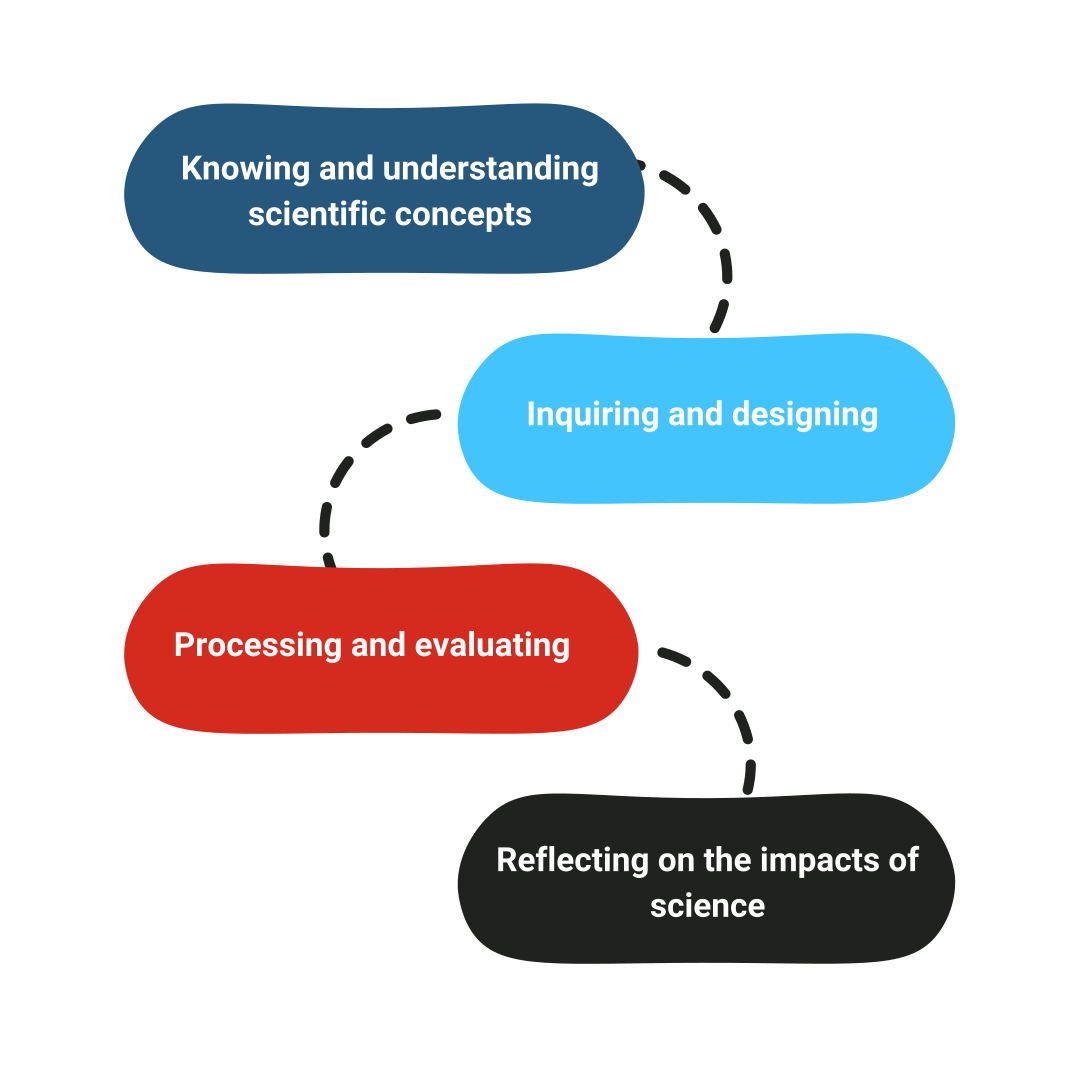
Science Learning Criteria
Year 9:
- Biology – Life of Plants, life of animals, life on Te Taiao (the natural world)
- Physics – Energy Transfer, wave theory
- Chemistry – Nature of matter, mixtures
- Astronomy – Space Systems
Year 10:
- Biology – Microbes, heredity
- Physics – Forces and motion, electricity and magnetism
- Chemistry – Basis of reactions, fuels and climate change
- Earth Systems – Water cycles, chemical weathering, tectonics
Year 11:
- Biology – Biological ideas related to variation
- Physics – Mechanics
- Chemistry – Reactions, acids and bases
- Earth and Space Science – Effects of astronomical cycles on planet earth
Science in Years 9-11
Science in Years 12-13
Beginning in Year 12, students can opt to take specialised courses which align with NCEA standards. Examples include:
Biology
This course delves into the fascinating world of living organisms. Students will explore topics such as cell biology, genetics, ecology, and evolution. Through practical investigations and theoretical learning, students will develop a deep understanding of biological processes and their applications in real-world contexts.
Chemistry
This course explores the fundamental principles of chemistry, including atomic structure, bonding, and chemical reactions. Students will conduct laboratory experiments to investigate chemical properties and apply their knowledge to real-world problems. Topics may include environmental chemistry, organic chemistry, and the chemistry of materials.
Physics
This course explores the fundamental laws of physics, covering topics such as mechanics, electricity, waves, and modern physics. Through practical experiments and theoretical learning, students will develop a deep understanding of the physical world.